Dentistry for Pregnant Patients Phoenix & North Scottsdale
 Dentistry for pregnant patients in Phoenix, AZ starts with reassuring news: the American Dental Association says cleanings, exams, X-rays and needed fillings are safe at every stage of pregnancy. At Jerome Riddle DDS, pregnancy changes how we run your visit, not whether you get care. Your gums, your enamel and your comfort in the chair all get a little extra attention while you’re expecting.
Pregnancy hormones exaggerate how gums respond to plaque, and morning sickness brings stomach acid into the mouth more often than usual. That’s why putting the dentist off for nine months tends to backfire. We treat pregnancy care as one branch of the family dentistry our office offers to patients of all ages, tuned for the months you’re carrying a baby.
Your obstetrician guides your pregnancy, and we look after your mouth. When a decision touches both, such as a medication beyond the local anesthetic, ADA guidance says it’s made with your OB, and we follow that.
On This Page
Is Dental Care Safe While You Are Pregnant?
Yes, and the major health groups agree on it. The ADA states that preventive, diagnostic and restorative dental treatment is safe throughout pregnancy. The CDC says regular and emergency dental care is safe at any stage. The American College of Obstetricians and Gynecologists (ACOG) has also advised that oral health care during pregnancy is safe and should be recommended.
Waiting carries its own risk. The ADA points out that delaying treatment may result in more complex problems, so a small cavity left alone for months can turn into a bigger repair, or an infection, right around your due date.
You may have heard that the second trimester is the only safe window. National guidance doesn’t put a trimester limit on cleanings, exams or needed treatment, so we book you when it suits you and your symptoms.
How Pregnancy Changes Your Mouth
Most of what shifts in your mouth during pregnancy comes from hormones and from your stomach, not from the teeth themselves. These are the changes we look for at every visit.
Pregnancy Gingivitis
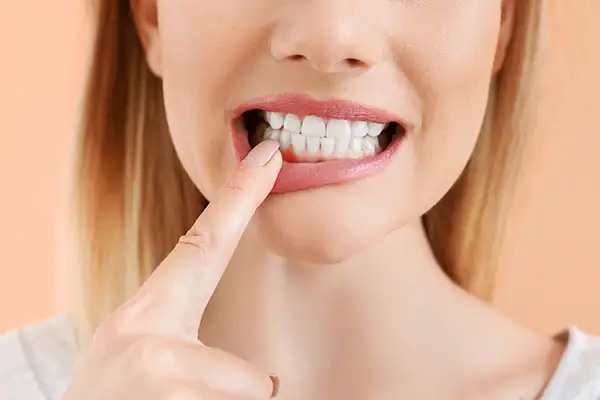 Higher hormone levels change the way gum tissue reacts to plaque. Some people develop pregnancy gingivitis: swollen, tender gums that may bleed a little when you brush or floss. The CDC notes that pregnant women are more likely to develop gingivitis, the early stage of gum disease. Because gingivitis can progress, we may suggest an extra cleaning during your pregnancy or an antimicrobial rinse.
If bleeding is what brought you in, our page on bleeding gums treatment explains how we tell simple gingivitis apart from deeper gum disease.
Pregnancy Tumors
The name sounds alarming, but these growths aren’t cancer. A pregnancy tumor is an overgrowth of gum tissue that usually appears in the second trimester, often between teeth. It tends to look red and raw, a bit like a raspberry, and it bleeds easily. Most go away after the baby is born. If one gets in the way of eating or brushing, let us know so we can take a look.
Morning Sickness and Your Enamel
Vomiting and reflux coat your teeth in stomach acid. It’s natural to want to brush right away, but the ADA advises against brushing immediately after vomiting. Rinse with a teaspoon of baking soda mixed in water to neutralize the acid, then brush a little later.
Cavity Risk
The CDC notes that women may be more prone to cavities, as well as gum disease, during pregnancy. Our Diagnodent laser helps us spot decay on the chewing surfaces at its earliest stage, when the fix is smallest. You can read about it and our other tools on our dental technology page.
Meet Your Dentists
Dr. Jerome Riddle studied at Northern Arizona University, earned his dental degree at the University of Southern California and completed a general practice residency at the UCLA and VA hospitals. He’s practiced in Scottsdale for over two decades, and he lays out treatment options based on each patient’s medical history and needs. During pregnancy, that history includes your due date and your OB’s guidance.
Dr. Eric Johnston graduated from Loma Linda University School of Dentistry in 2017. He aims to treat every patient’s dental needs the way he’d treat his own family’s, which is exactly the mindset you want when you’re caring for two.
Your Pregnancy Dental Visit, Step by Step
A visit during pregnancy follows the same basic order as any checkup. The difference is in the questions we ask and how we set you up in the chair.
Step 1: Tell Us You Are Expecting
Let our team know as soon as you know, even if you haven’t shared the news widely yet. Tell us how far along you are and your due date, since both shape how we plan any treatment.
Step 2: Update Your Health History
Bring a list of your prenatal vitamins and any medications, along with your OB’s name and phone number. If a question comes up about a medicine, ADA guidance calls for consulting your obstetrician, and having that contact on file saves a step.
Step 3: Cleaning and Exam
Your professional dental cleaning and exam look much like any other visit, with extra attention to puffy or bleeding gum tissue. If we find deeper pockets, a deep cleaning can still go ahead. ACOG notes that treating gum disease during pregnancy isn’t associated with any harm to mother or baby.
Step 4: X-Rays Only When They Change the Plan
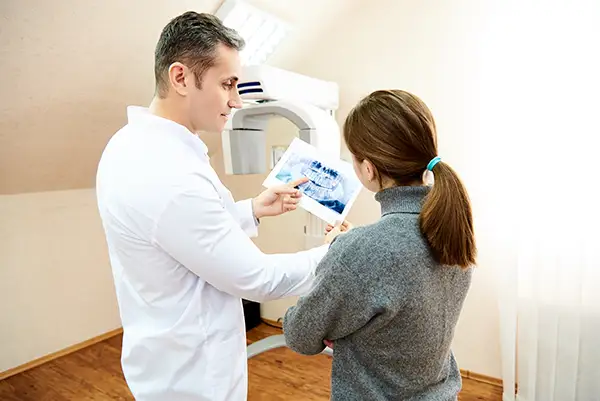 We take X-rays when they’re needed to diagnose a problem, not on autopilot. The ADA considers dental X-rays safe at any stage of pregnancy, and our digital X-rays are quick and can be retaken right away if an image comes out blurry. You might expect a lead apron. ADA guidance updated in July 2025 says abdominal and thyroid shielding is no longer recommended, so ask us at your visit if you’d like to talk it through.
Step 5: Numbing for Fillings and Other Treatment
If you need a filling or other treatment, the ADA says local anesthetics with epinephrine, such as lidocaine, may be used during pregnancy. The ADA’s MouthHealthy site notes that researchers found no difference in rates of miscarriage, birth defects, premature birth or birth weight tied to these numbing medicines. Getting numb for a small repair is also far easier on you than living with a toothache.
Step 6: Comfort in the Chair
Lying flat can make some pregnant patients dizzy or queasy, especially later on. National consensus guidance recommends keeping your head higher than your feet, a semi-reclined position and frequent position changes, with a small pillow under the right hip or a slight turn to the left when needed. Before we start, we’ll agree on a stop signal, like a raised hand, and we pause whenever you use it.
Sedation, Medicine and Fluoride During Pregnancy
Our office doesn’t offer nitrous oxide (laughing gas). That happens to line up with ADA guidance that pregnant patients and staff avoid exposure to nitrous oxide. Comfort here comes from local anesthetic, pacing and breaks, the same approach described on our dentistry for anxious patients page.
Pain relief after treatment is a decision for you and your OB. The ADA says medications for pain relief should be chosen after consultation with the obstetrician, so please check with your OB or pharmacist before taking anything over the counter.
If we recommend a fluoride treatment, nausea matters. The ADA notes that fluoride varnish may be preferred over gel treatments for pregnant patients, and our office applies fluoride varnish right in the chair.
Dental Problems That Should Not Wait
If you have trouble breathing or swallowing, swelling that spreads toward your eye or down your neck, or a high fever along with a tooth problem, call 911 or go to the nearest emergency room. MedlinePlus lists breathing difficulty from a deep mouth infection as an emergency, and it needs hospital care first.
For everything short of that, don’t wait until after delivery. ACOG states that conditions needing immediate treatment can be managed at any time during pregnancy. Call us if you notice:
| • |
A toothache that keeps you up – throbbing or lingering pain often means the nerve is involved
|
| • |
Gum swelling or a pimple on the gum – signs of an infection that needs a diagnosis
|
| • |
A broken tooth or lost filling – sharp edges and open cavities get worse with time
|
| • |
Bleeding that won’t settle – gums that bleed heavily or a growth that bleeds every time you eat |
Our emergency dentistry page explains what an urgent visit at our office looks like.
After Your Baby Arrives
 A checkup a few months after delivery is a good time to see how your gums have settled and to catch anything that slipped during the newborn weeks. Pregnancy tumors usually disappear after birth, and that visit lets us confirm it.
Your baby’s mouth needs care sooner than most parents expect. All 20 baby teeth are already in place under the gums at birth, and MouthHealthy suggests wiping your baby’s gums with a damp cloth or gauze after feedings. We recommend your child’s first dental visit by the first birthday or within six months of the first tooth coming in.
Why Expecting Parents Choose Our Office
We already see pregnant patients dealing with first-trimester nausea and third-trimester comfort, and our visits are built around pacing rather than rushing. Before any instrument goes in, you’ll have a way to stop us, and longer work can be split into shorter visits when the case allows.
Our hours give you options around morning sickness. Monday and Tuesday appointments run from 8:00 a.m. to 5:00 p.m., and Wednesday and Thursday start at 7:00 a.m., so you can pick the time of day you feel best.
You’ll also see what we see. Our intraoral camera puts pictures of your teeth and gums on a screen, which helps when we’re explaining whether a puffy spot is gingivitis or something that needs treatment now. For everyday brushing and diet tips, our blog post on dental care and pregnancy is a good companion to this page.
Cost, Insurance and Payment
What you pay depends on what your mouth needs. A routine cleaning and exam is a very different visit from a filling or a deep cleaning, so we’ll go over any treatment plan with you before work begins and give you a list of fees.
We accept Aetna, Cigna, Delta Dental and MetLife dental plans, and our front office can verify your benefits before your appointment. Plans differ on how many cleanings they cover in a year, so if we suggest an extra cleaning during your pregnancy, we’ll check your coverage first. Payment plans are available too, including CareCredit and in-house options for qualified patients. See our insurance and payment options for details.
Schedule Your Pregnancy Dental Visit
Whether you’re in your first trimester or counting down the days, it isn’t too late or too early for a checkup. Call 480-991-4410 or request an appointment online, and tell us you’re expecting when you book. We’re at 7010 E. Chauncey Ln., Suite #140, Phoenix, AZ 85054. Our contact page has office hours and a way to reach us with questions first.
Frequently Asked Questions
Do I need a note from my OB before a dental cleaning?
A routine cleaning and exam doesn’t usually call for one, because the ADA describes preventive and diagnostic dental care as safe throughout pregnancy. Things change if treatment would involve a medication other than local anesthetic: the ADA says that choice is made in consultation with your obstetrician. If you have a high-risk pregnancy or your OB has given you specific instructions, bring them along.
Should I wait until my second trimester to see the dentist?
No, you don’t have to wait. The CDC says regular and emergency dental care is safe at any stage of pregnancy, so come in whenever you’re due for a visit or have a problem. Some patients simply feel better mid-pregnancy, after early nausea fades and before the third trimester makes the chair less comfortable, and that’s a fine reason to pick those months.
Is it too late for dental work in my third trimester?
It isn’t too late. National consensus guidance says oral health care, including X-rays and local anesthesia, is safe throughout pregnancy, and urgent care can be given at any time. Late in pregnancy, we’ll keep you semi-reclined, let you change position often and take breaks whenever you need them.
Can I get dental X-rays if I am trying to get pregnant or breastfeeding?
Yes. MouthHealthy, the ADA’s patient site, says dental X-rays don’t need to be delayed if you’re trying to become pregnant or are breastfeeding. Dental X-rays use very low doses of radiation, and we only take the images we need.
Can I have a cavity filled while pregnant?
Yes. The ADA lists restorative treatment, which includes fillings, as safe throughout pregnancy, and treating a cavity early keeps it from turning into a bigger problem. Our office places tooth-colored composite dental fillings rather than amalgam (silver) fillings.
Can gum disease during pregnancy affect my baby?
Researchers have looked at it, but a cause hasn’t been proven. ACOG notes that some studies show a possible association between gum infection and preterm birth, yet treating gum disease during pregnancy hasn’t been shown to improve birth outcomes. Treatment is still safe and does improve your own oral health, which is reason enough. Our blog post on oral health and preterm birth covers the research in more depth.
When do baby teeth start forming?
Earlier than you might think: according to MouthHealthy, your baby’s teeth begin forming between the third and sixth month of pregnancy. Eating well and keeping up your own dental care during those months is part of a healthy start, and we’re happy to answer baby-teeth questions at your own checkup.
Can I bring my partner or a support person to my appointment?
Yes, you’re welcome to. Some patients like having someone in the treatment room, while others prefer them in the lobby, and either works for us. A second set of ears is especially helpful when we’re walking through findings or a treatment plan.
|